
The Roghan Shelf: Which Herbal Oil for Hair, Which for Joints, Which for Skin
Badam, nariyal, zaitoon, kalonji, amla, til, sarson, chambeli, suranjan and tarpin - ten roghan oils, what each is traditionally used for, how to apply them, and why warming and cooling oils are not interchangeable.
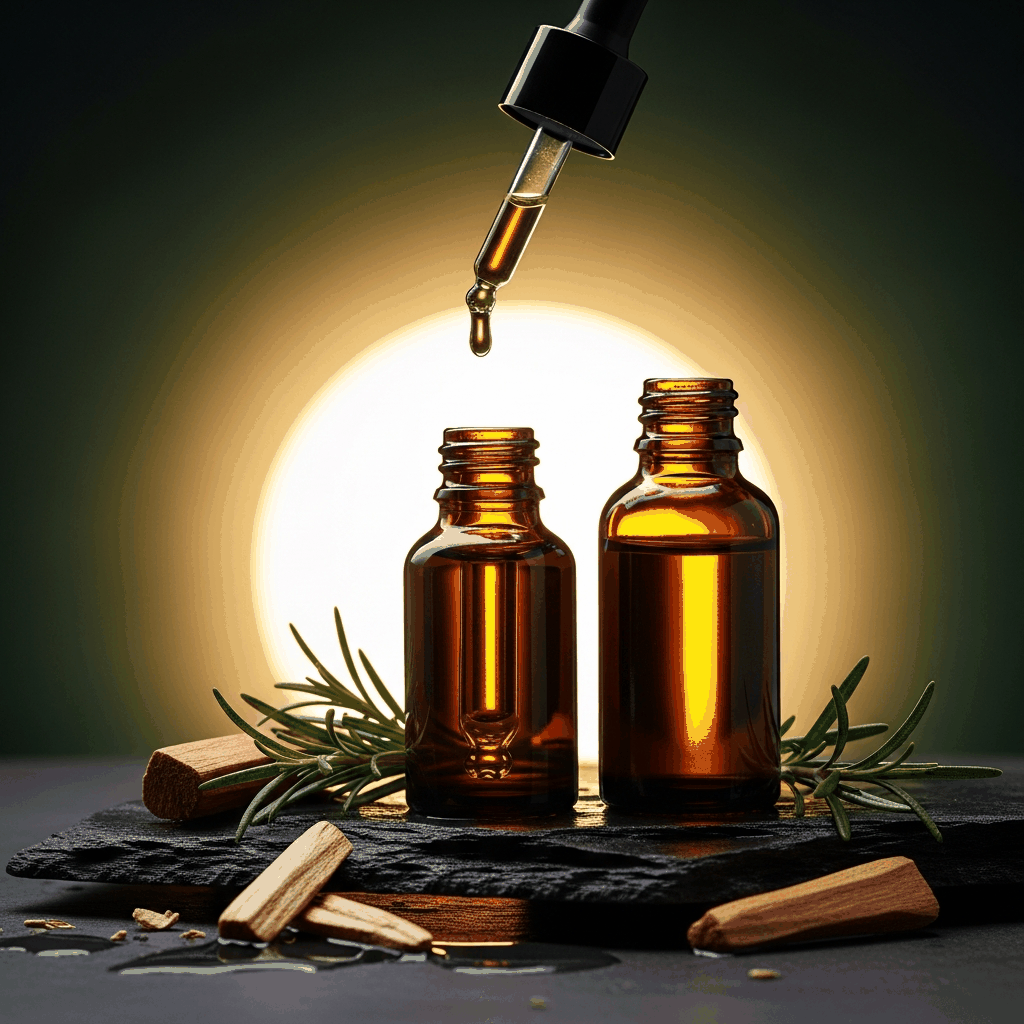
Open the cupboard in almost any Pakistani home and you will find a small congregation of oil bottles: a squat tin of sarson ka tel from the pansari, a green bottle of zaitoon someone brought back from Umrah, a half-used roghan badam bought for a child’s exam season, and something dark and unlabelled that a grandmother swears by for knees. Nobody wrote the system down, but there is one — and it is older and more logical than the jumble on the shelf suggests.
In Unani practice, oils are not simply greases. Each has a temperament, a place on the warm-to-cool spectrum, and a set of traditional uses that follow from it. Knowing which is which is the difference between an oil that suits you and one that sits on the skin doing nothing except attracting dust.
Warming and cooling: the idea that organises the whole shelf
The single most useful concept in traditional oil use is mizaj — temperament. Some oils are considered garam (warming): sarson, til, kalonji, suranjan, tarpin. Others are sard (cooling): nariyal, chambeli, roghan sandal. A few sit near the middle: badam and zaitoon are moderate, which is why they are the safest defaults for people who do not know where to start.
The practical rule is seasonal and situational. Warming oils are for cold weather, stiff joints, sluggish circulation, the ache that arrives with December fog. Cooling oils are for the heat, for scalps that feel hot and itchy in June, for skin that flushes easily, and for anyone whose complaint gets worse in summer. Applying a strong warming oil to an already-overheated scalp in the middle of a Multan July is a classic mistake — the head feels heavier, not better.
This is not mystical. Some of these oils genuinely produce a mild warming sensation on skin because of their volatile compounds; others feel cool as they evaporate or simply sit lighter. The traditional classification tracks how they actually feel in use.
The ten oils, and what each is traditionally for
| Oil (roghan) | Traditionally used for | How it is applied |
|---|---|---|
| Badam (almond) – moderate | Hair nourishment, dry skin, general strengthening; the classic “student’s oil” | Few drops massaged into scalp or damp skin; also taken by spoon in some households |
| Nariyal (coconut) – cooling | Hot scalp, summer hair care, dry skin in humid weather | Warmed slightly, worked through scalp and lengths; left 1-2 hours or overnight |
| Zaitoon (olive) – moderate | Skin and hair conditioning, gentle body massage, dry patches | Massaged into skin after bathing; blended with heavier oils as a carrier |
| Kalonji (black seed) – warming | Scalp care, general strengthening; long-standing place in prophetic tradition | Small quantity, usually diluted into a carrier; massaged into scalp |
| Amla (Indian gooseberry) – cooling | Hair strength, premature greying, scalp conditioning | Massaged into scalp, often left overnight before a morning wash |
| Til (sesame) – warming | Body massage, joint and muscle stiffness, winter dryness | Warmed and massaged into limbs and joints; the classic malish base |
| Sarson (mustard) – strongly warming | Winter body massage, aching joints, infant malish in many households | Warmed, sometimes with ajwain or garlic; massaged firmly into limbs |
| Chambeli (jasmine) – cooling | Scalp comfort, restfulness, fragrance; a summer favourite | Light application to scalp and temples, often in the evening |
| Suranjan (colchicum) – warming | Traditionally applied for joint stiffness and discomfort | Applied locally to the joint and massaged in; external use only |
| Tarpin (turpentine) – strongly warming | Local application for muscular aches; produces a marked warming sensation | Small amount, usually blended into a carrier oil; external use only, well diluted |
Oils for hair: what actually goes on the scalp
Hair oiling is the most universal of these practices, and also the most casually done. The oil is not really for the hair — it is for the scalp and for the massage. The lengths benefit from a light coating, but the point of champi is circulation, relaxation, and giving a dry scalp something to hold onto.
For most people, badam, nariyal, amla and chambeli are the sensible choices. Coconut and amla are the summer pair: cooling, familiar, and easy to wash out. Almond is the year-round default, especially for dry, brittle hair. Chambeli is the one people reach for when the head feels hot and sleep is poor. Kalonji is usually used in small amounts blended into one of the others rather than alone.
Warm the oil gently — bottle in a mug of hot water, not on a flame. Part the hair in sections and apply to the scalp with fingertips, not nails. Massage in small circles for five to ten minutes; the massage is doing at least as much work as the oil. Leave it an hour or two, or overnight if your pillowcase can bear it, then wash out with a mild shampoo. Twice a week is plenty. Daily oiling on an oily scalp invites the opposite of what you wanted.
- Do not oil a scalp that is already inflamed, flaking heavily or has open sores — see a doctor first.
- Do not tie oiled hair tightly; wet-feeling hair under tension breaks more easily.
- Oiling does not reverse pattern baldness or hormonal hair loss. It conditions and it comforts. That is a real benefit, honestly stated.
Oils for joints and muscles: the malish tradition
Come November, the warming oils earn their keep. Til and sarson are the twin pillars of body malish across Punjab, and the technique matters as much as the oil. Warm the oil to comfortably hot, not scalding. Work from the extremity towards the trunk — from ankle to knee, from wrist to shoulder — using long strokes with the flat of the hand, then firmer circular pressure around the joint itself. Ten to fifteen minutes per limb. Cover up afterwards and stay out of a draught; the entire point of a warming massage is undone by sitting under a fan straight after.
Suranjan and tarpin belong in a different category: they are local applications for a specific sore knee or shoulder, not whole-body oils. Both are strong. Suranjan preparations are for external use on the joint. Tarpin should always be well diluted into a carrier — it produces a strong warming sensation and neat application on thin or broken skin is a bad idea. Keep both away from the face, eyes and mucous membranes, and wash hands after use.
Malish ka faida tel se nahi, haath se hai — the benefit of massage comes from the hand, not only from the oil.
A word on infant malish, since almost every family does it: keep to gentle, moderate oils, keep the room warm, use light pressure, and skip the strongly warming preparations entirely. And if a joint is hot, swollen, red or suddenly very painful, that is not a case for oil — that is a case for a doctor the same day.
Oils for skin: lighter hands, better results
On skin, less is more. Zaitoon and badam are the reliable everyday choices, applied to damp skin straight after a bath so they seal in water rather than sitting on a dry surface. Nariyal suits humid weather and works well for dry patches on elbows, heels and shins. Kalonji is generally blended in small proportion rather than used alone on the face.
Two habits improve everything. First, warm the oil between your palms before applying — cold oil drags on the skin. Second, use a quarter of what you think you need; if the skin still looks glossy after ten minutes, you overapplied. For the face, three or four drops is genuinely enough.
Patch test any oil that is new to you, particularly the strong ones. Inner forearm, twenty-four hours, one new product at a time. Store bottles away from sunlight and heat — a cupboard, not a windowsill. Herbal oils go rancid, and a rancid oil smells sharp and slightly stale; if yours does, discard it rather than pushing through the last quarter.
What to actually keep on your shelf
You do not need all ten. A well-chosen four covers almost every household need for a year.
Keep roghan badam as the all-purpose moderate oil for hair and skin. Keep nariyal for summer scalp and dry skin. Keep til or sarson for winter body massage, chosen by how strongly warming you like it. Add one specific oil for whatever actually troubles you — amla if hair is your concern, chambeli if heat and restlessness are, a suranjan preparation if a particular joint stiffens each cold season.
Buy small bottles and finish them. Match the oil to the season and to how your body feels, not to whichever bottle happens to be nearest. And treat the strong ones — tarpin, suranjan, undiluted kalonji — with the respect you would give any concentrated preparation: diluted, external, patch-tested, kept out of reach of children.
Our full roghaniyat range covers the classical oils described here, prepared under DRAP licence in Multan. If you are building a broader routine, the everyday wellness section carries the companions most families keep alongside them, and the wider shop holds the syrups, safoof and arqiyat that complete the traditional home cupboard.

Ask us something
Questions about dosage, ingredients or which product suits you are welcome — a member of our team reads every message. We cannot diagnose or treat conditions here; for that, please speak to your physician or hakeem.