

Arq, Sharbat, Rub, Safoof: How the Form Changes the Medicine
Same herb, six preparations. What steam distillation, sugar, slow evaporation, milling, honey and oil each do to a plant — and how to tell which Unani dosage form belongs in your cupboard this week.
On the back wall of an old dispensary off Hussain Agahi bazaar there is a shelf where the same plant appears four times over. A glass carboy of clear liquid. A bottle of dark syrup. A stoneware jar of brown powder. A tin of oil. The same herb named on every label, and four entirely different medicines. A customer who walks in asking for “the one with saunf in it” will be asked, quite reasonably, which one.
Why the form is half the prescription
In Unani practice the preparation is not packaging. It decides which parts of the plant actually reach you, in what quantity, how quickly they act, and where in the body they are expected to do their work. Two bottles can carry the same herb and behave so differently that a hakeem would never swap one for the other.
Three things vary. First, what the plant is extracted into — water, sugar, honey, fat, or nothing at all. Second, how much heat and time are applied, since gentle vapour lifts one set of constituents and long boiling concentrates a completely different set. Third, how much of the plant survives into the finished product: a distillate keeps only what will travel as steam, while a powder keeps everything, fibre included.
Once you can read those three variables off a label, the shelf stops being confusing and starts looking like what it is — a set of tools, each shaped for a particular job.
Half the medicine is in the herb; the other half is in what you do to it. It is the sort of thing you hear in a compounding room, and it explains why two preparations of one plant are never priced the same.
The water-based forms: arq and sharbat
Arq — the steam distillate
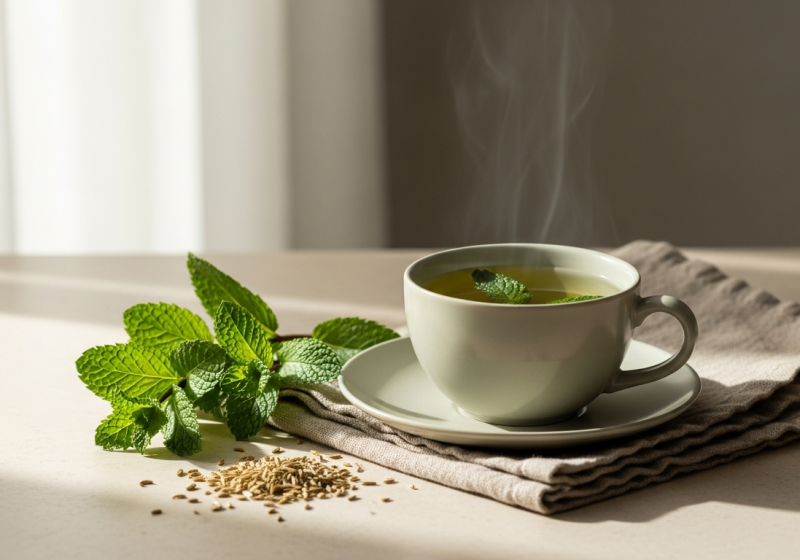
An arq is made by packing plant material and water into a still, heating it gently, and condensing the vapour that rises. What collects in the receiver carries only the fraction of the plant volatile enough to travel as steam — the aromatic oils. Everything heavy stays behind in the pot: sugars, tannins, minerals, fibre, colour. That is why an arq is clear as water, why it smells more than it tastes, and why it contains no sweetness whatsoever.
The practical consequences follow directly. An arq is light in substance but quick to be felt, since there is nothing for the body to break down first. It suits children, elderly relatives and anyone avoiding sugar. It is usually taken by the spoon or capful in water rather than drop by drop, and once opened it will not sit in a warm pantry for a year the way a syrup will. Our arqiyat — arq-e-podina, arq-e-badiyan, arq-e-gulab, arq-e-ajwain — all come off this same method.
Sharbat — the syrup
A sharbat takes the opposite approach. The plant or fruit is extracted into water or pressed for juice, and the extract is then cooked with sugar to a set density. Sugar does three jobs at once: it preserves, it carries, and it slows. Because there is no distillation, the non-volatile constituents survive — the fruit acids, the colour, the body you can feel on the tongue.
Two families sit under the name. Fruit sharbats are refreshment first and gentle correction second. Compounded medicinal syrups and tonics are the other family: multi-herb formulas built for daily use over weeks, where the sweetness is a delivery system rather than the point. Both are diluted before drinking, and both are the easiest form to give a household that will not take anything bitter.
The concentrated forms: rub, safoof and majun
Rub — the fruit concentrate
A rub is fruit juice reduced by slow evaporation until it thickens, with little or no sugar added. Rub-e-anar, rub-e-toot and rub-e-beheedana are the familiar ones. Spoon for spoon, a rub is more fruit and less sugar than a sharbat: darker, more sour, more concentrated, and closer to the character of the original fruit. Traditionally it is chosen when the fruit itself is the medicine, and it is often taken neat by the spoon rather than diluted into a glass.
Safoof — the powder
Milled dried herbs, sieved fine and blended. Nothing is extracted and nothing is discarded, which makes safoof the most complete of the forms — you receive the whole drug, fibre and all. It is also the slowest and the least forgiving. A powder must be measured properly, taken with enough water, and given time; it is the form for the ordinary, repeating complaint that you intend to work on for a month, not for the discomfort you feel at nine o’clock tonight.
Majun — the electuary
A majun binds powders into a soft paste with honey or a thickened syrup, sometimes with ghee, sometimes with gum. The binder is doing real work. It makes harsh or bitter powders swallowable, it slows their release, and honey has itself long been regarded as a corrective that softens the sharpness of what it carries. Majun is the traditional vehicle for warming, restorative winter formulas, taken by the spoon with warm milk — which is exactly why the jar comes out of the cupboard in December and goes back in around March.
Roghan: the form that never goes in
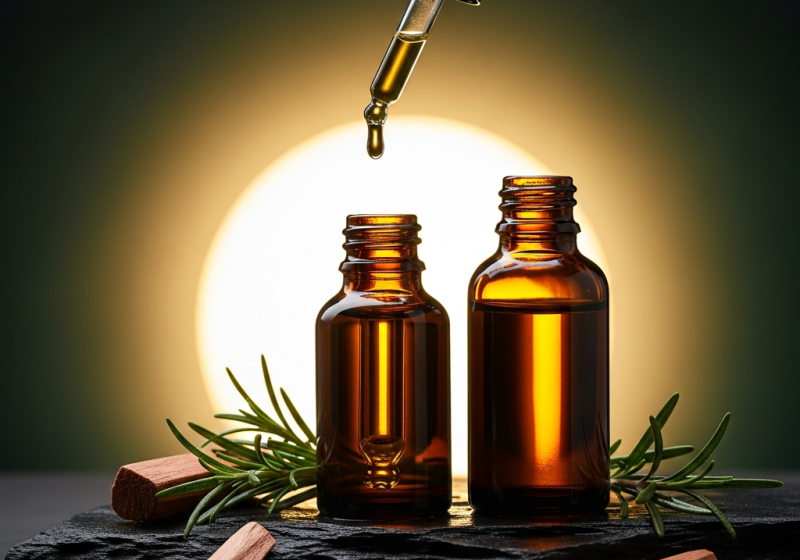
Roghan is oil. Herbs are infused or slowly cooked into a base — til, badam, narial, zaitoon — until the fat has taken up what it can hold. Everything else on this list is swallowed; roghan is not. It goes on the scalp, on aching joints, on the chest in winter, on the soles of the feet before sleep.
The logic is that fat carries what water cannot, and that it stays where it is put instead of being carried off in minutes. In practice the application matters as much as the oil itself: warmed slightly, worked in slowly, given time. Our herbal oils follow the traditional slow-cooked method, which is why they smell of the herb rather than of perfume.
The six forms side by side
| Form | How it is made | What it carries | Usual way it is taken | Traditionally chosen when |
|---|---|---|---|---|
| Arq | Steam distillation | Volatile aromatics only; no sugar | A capful or two in water | You want something light and quickly felt |
| Sharbat | Extract cooked with sugar | Fruit acids, colour, non-volatile constituents | Diluted one part to six or eight | Daily, pleasant, shareable use; thirst and heat |
| Rub | Juice reduced by evaporation | Concentrated fruit, little added sugar | A spoonful, neat or in water | You want the fruit’s own character, less sweetness |
| Safoof | Dried herbs milled and blended | The whole plant, fibre included | A measured spoon with warm water | A steady complaint you plan to work on for weeks |
| Majun | Powders bound in honey or syrup | Whole powders plus the binder | A spoon with warm milk | Winter; restorative and warming formulas |
| Roghan | Herbs infused into a base oil | Fat-soluble constituents | Applied and massaged in | The complaint is local and on the outside |
Choosing between them, in practice
Most household decisions come down to four questions. How fast do you want it to act? How long do you intend to take it? Does the person object to sugar, or to bitterness? And is the trouble internal or on the surface? Run those four and the form usually chooses itself.
- Something now, and mild — an arq, thin and warm-watered.
- Something the whole family will actually drink — a sharbat or a tonic syrup.
- Fruit character with less sugar per spoon — a rub.
- A month of steady, unglamorous work — a safoof.
- Winter, warmth and restoration — a majun.
- Aching joints, dry scalp, a cold chest — a roghan.
Two cautions worth carrying to the shop. Do not take the same herb in three forms at once because each one seemed like a good idea — that is how households end up with a cupboard full of half-used bottles and no sense of what helped. And check the label for a manufacturer’s licence and a batch number; a properly registered preparation tells you who made it, when, and under whose responsibility, which is the least you should expect of anything you swallow.
The old shelf in the bazaar was never showing off. Four jars of one herb is what it looks like when a tradition has spent a very long time asking not just which plant, but in what form, and for whom.

Ask us something
Questions about dosage, ingredients or which product suits you are welcome — a member of our team reads every message. We cannot diagnose or treat conditions here; for that, please speak to your physician or hakeem.