Tibb-e-Unani: How Greek Medicine Came to Multan
The word Unani simply means Greek. Here is how a medical tradition that began with Hippocrates reached Multan by way of Baghdad and Delhi, what its core ideas actually are, and where it sits in Pakistan today.
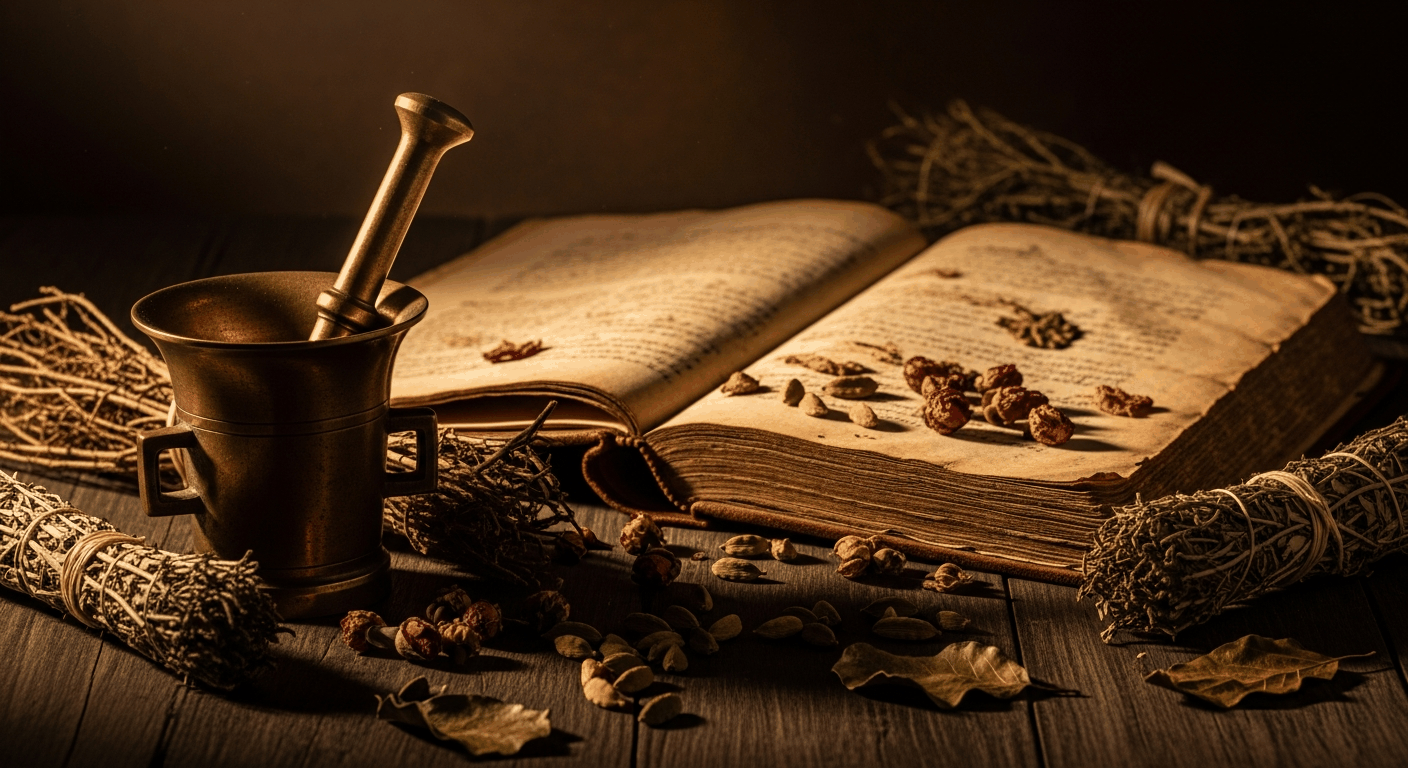
Walk into an old hakeem’s shop off Hussain Agahi bazaar and the first thing you notice is the shelving — rows of brown glass, labels written by hand, a copper still in the back room that has plainly outlived two generations. Ask about a stomach that has been unsettled since the monsoon, and the man behind the counter will answer using a vocabulary that is roughly two and a half thousand years old. The name gives the journey away: Unani is simply the Urdu word for “Greek”.
Tibb-e-Unani is the system of medicine that travelled from the Aegean to the Punjab over the course of a millennium and a half, picking up material, language and practitioners at every stop. It is not folklore and it is not mysticism. It is a documented tradition with textbooks, examinations, teaching hospitals and, in Pakistan, a regulator. Knowing where it came from makes it far easier to judge what it is genuinely good for.
The Greek foundation
The tradition dates its formal beginning to Hippocrates of Kos in the fifth century BCE. His central move was radical for its time: illness has natural causes, it can be observed and recorded, and the physician’s first duty is to watch carefully and interfere as little as possible. Diet, air, exercise and sleep were treatment in their own right, not the preamble to it.
Some six centuries later Galen, physician first to gladiators and then to emperors, organised that inheritance into a system. The body was read through four akhlat or humours — dam (blood), balgham (phlegm), safra (yellow bile) and sauda (black bile). Their proportions gave a person their mizaj, or temperament: hot, cold, wet, dry, or some blend of these. Health was balance, illness was balance disturbed. Every food, herb and season carried a temperament of its own, which is why a hakeem will still tell you without hesitation that sonf is cooling and sonth is warming.
Modern physiology replaced the humours long ago as an explanation of how the body actually works. What survived — and what remains genuinely useful — is the framework built around them. Before reaching for any medicine at all, a Unani physician was expected to review the six essentials, the asbab-e-sitta zarooriya:
- Air and environment — ventilation, humidity, the season you are living through
- Food and drink — quantity, quality and, crucially, timing
- Movement and rest
- Sleep and wakefulness
- Retention and evacuation — digestion, and what the body clears
- Mental states — worry, grief, anger, contentment
A twenty-first-century physician who asks about your sleep, your salt and your stress before writing anything down is, without knowing it, working through the same list.
The vocabulary you will actually meet
| Term | What it means | What it looks like in practice |
|---|---|---|
| Mizaj | Temperament — the hot/cold, wet/dry character of a person, food or herb | A cooling sharbat suggested in June, a warming safoof in January |
| Ilaj bil Ghiza | Treatment through diet | Changing what and when someone eats before anything else is tried |
| Ilaj bil Tadbeer | Treatment through regimen | Massage, bathing, sleep hours, walking, breathing |
| Ilaj bil Dawa | Treatment through medicine | Arq, sharbat, safoof, majoon, roghan — the dispensary itself |
The order in that table is not decorative. Medicine sat last, after food and after regimen, and a hakeem who reached for the shelf first was considered to be doing the job backwards.
Baghdad, Ibn Sina and the Canon
Greek medicine might have stayed Greek. What changed it was the great translation effort centred on Baghdad from the ninth century onward, when scholars — Hunayn ibn Ishaq foremost among them — rendered the Hippocratic and Galenic corpus into Arabic with a care that in several cases preserved texts the original language later lost. Translation quickly became argument. Al-Razi, running a hospital in Baghdad, wrote up individual cases, recorded outcomes honestly including the failures, and was not shy about contradicting Galen where his own observation disagreed.
The synthesis arrived with Ibn Sina — Avicenna to Europe — and his Al-Qanun fi’l-Tibb, The Canon of Medicine, completed in the early eleventh century. It was not merely a compilation. Ibn Sina imposed order on a sprawling inheritance: anatomy and general principles, then a materia medica of several hundred simple drugs, then disease by disease, then compound formulations. He wrote about regimen, about the effect of the mind on the body, about testing a drug’s effect on a single condition at a time before crediting it with anything.
Translated into Latin, the Canon became a standard teaching text in European universities for centuries — an unusual case of a book crossing every religious and political boundary of its era on the strength of being useful. Meanwhile the materia medica itself kept growing, absorbing Persian, Arab and Indian plants as trade routes moved them.
How it reached the subcontinent
Unani medicine arrived in South Asia with scholars, soldiers and merchants during the Delhi Sultanate, and settled in properly under Mughal patronage. Court hakeems held serious rank; hospitals were endowed; formularies were compiled in Persian and later in Urdu. The tradition did not arrive as a sealed package, though — it met an existing and highly developed Ayurvedic pharmacy and simply took what worked. Amla, neem, sandal, harar, bahera and dozens of other subcontinental plants entered Unani formularies and never left.
The kitchen changed it too. The Persian sharbat — a fruit or flower syrup diluted with water — met the subcontinental summer and became a domestic institution rather than a medical one. That is why the sharbat trolley comes out in Multan in May without anyone thinking of it as taking medicine at all.
The nineteenth century was hard on the tradition. Colonial medical policy withdrew official recognition and funding, and by the late 1800s Tibb survived largely in family practice. Its revival owed a great deal to Hakim Ajmal Khan in the early twentieth century, who campaigned for institutional teaching, standardised training and formal qualification rather than apprenticeship alone — the model that both Pakistan and India inherited at Partition.
Where Unani stands in Pakistan today
Tibb in Pakistan is a regulated field, not an informal one. The Drug Regulatory Authority of Pakistan (DRAP), established by act of parliament in 2012, oversees alternative medicines and health products alongside conventional pharmaceuticals. Manufacturers hold an enterprise licence tied to a specific, inspected premises; individual products carry their own entry in the register. Practitioners register separately through the national council governing Tibb.
What that means in practice is that a properly made herbal product in Pakistan is traceable. Laraib Herbal Pharma has manufactured in Multan since 1998 and operates under enterprise licence E. No: 00803, with product entry numbers printed on registered lines. The distinction between a licensed manufacturer and a back-room operation with attractive labels is a real one, and it is printed on the carton if you know where to look.
Alongside, not against, modern medicine
The honest position is the least dramatic one. Unani medicine is at its most useful in the territory of daily maintenance and seasonal comfort: digestion, appetite, the heat of a Multan June, the dry cough that arrives with the first cold nights, the routine of a household rather than the emergency. A distilled arq after a heavy iftar, a warming safoof in winter — these belong to habit, not to crisis.
Acute illness, infection, chest pain, injury, pregnancy complications, anything sudden or severe — that is hospital territory, and no responsible hakeem would suggest otherwise. Nor should herbal preparations replace prescribed medication. Plants contain active compounds; active compounds interact. If you take regular medication, tell your doctor what else you are taking, exactly as you would about anything from a pharmacy.
Parhez ilaj se behtar hai — restraint is better than treatment. Older than any of the textbooks, and still the first thing a good hakeem says.
What to do with all this
If you are curious rather than unwell, start where the tradition itself starts: with the six essentials, not the shelf. Sort out sleep, water and the timing of meals for a fortnight before you buy anything, because that is what a hakeem would have told you to do first anyway.
When you do buy, buy traceable. Check the carton for a manufacturer’s name and full address, a batch number, manufacturing and expiry dates, and a licence reference. Start with single, well-understood preparations rather than elaborate compounds. Treat anything that promises to cure a named serious disease as a reason to put the bottle down. And keep your doctor informed — the two systems have coexisted in this country for a very long time, and they work best when neither is asked to pretend the other does not exist. Our full range sits in the shop if you would like to see how these categories divide up in practice.
Ask us something
Questions about dosage, ingredients or which product suits you are welcome — a member of our team reads every message. We cannot diagnose or treat conditions here; for that, please speak to your physician or hakeem.