
From the field to the seal
Six stages, all of them under one roof in Multan. This is exactly what happens to a rose petal between the orchard at dawn and the bottle you unscrew at home.
Nothing here is fast
A herbal syrup can be made in an afternoon from concentrate, colour and preservative. Ours takes days, and most of that time is spent watching rather than doing — because in this trade, every shortcut shows up in the glass.
Every bottle that leaves our plant has travelled the same six stages — from the field where the herb is cut, to the carton that is sealed and dispatched. Nothing is outsourced, and every batch is traceable to its harvest lot.
The six production stages
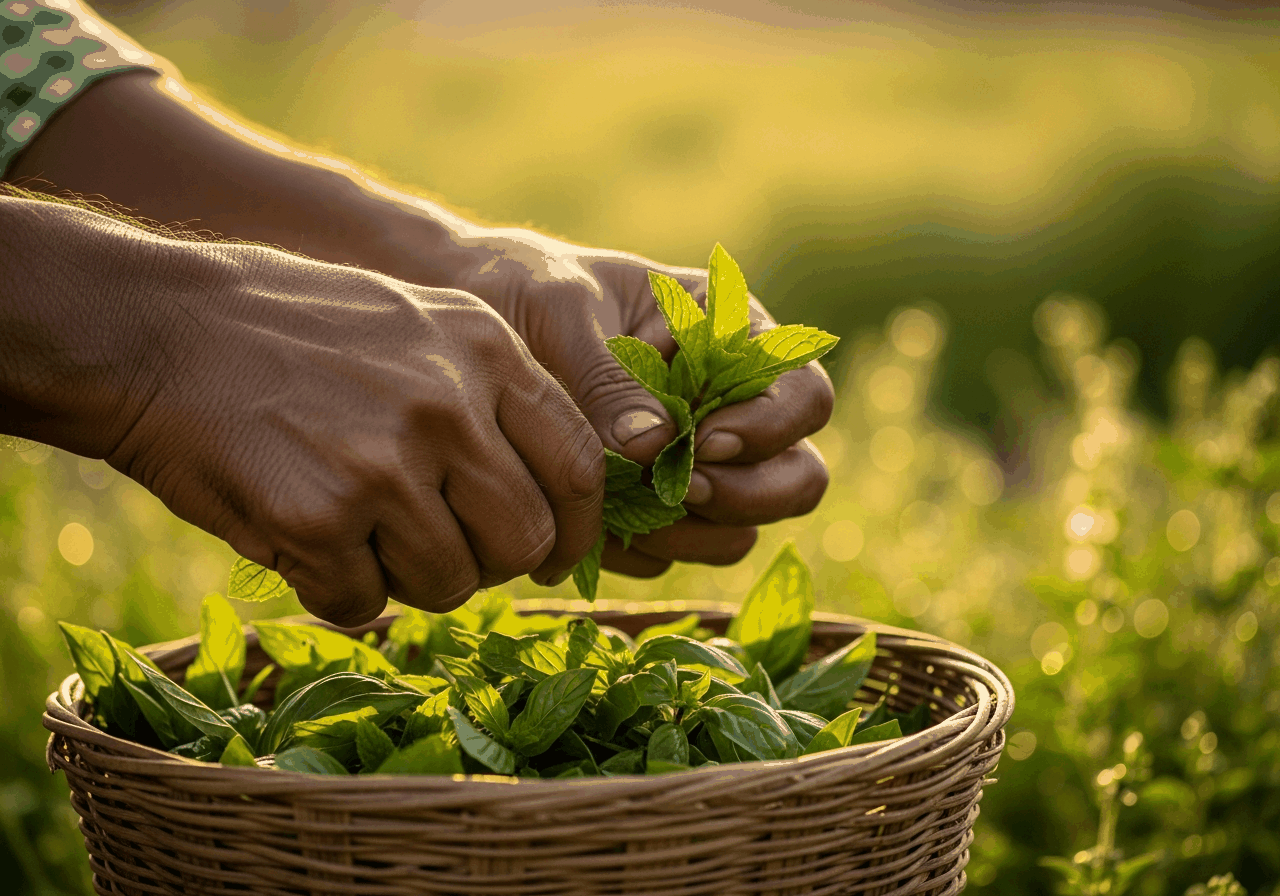
Harvest & sourcing
Rose comes from the Kasur belt at first light, while the petals still hold their oil. Pomegranate, plum and mulberry arrive from orchards across South Punjab in the two-week window when the sugars peak. Fennel, coriander and chicory seed are bought by the sack from named traders in the Multan seed market — never through an anonymous middleman, because a herb you cannot trace is a herb you cannot stand behind.
- Sourcing radius Multan, Kasur, Bahawalpur, Rahim Yar Khan
- Intake window Petals within 12 hours of picking
- Accepted on Aroma, colour, moisture, foreign matter
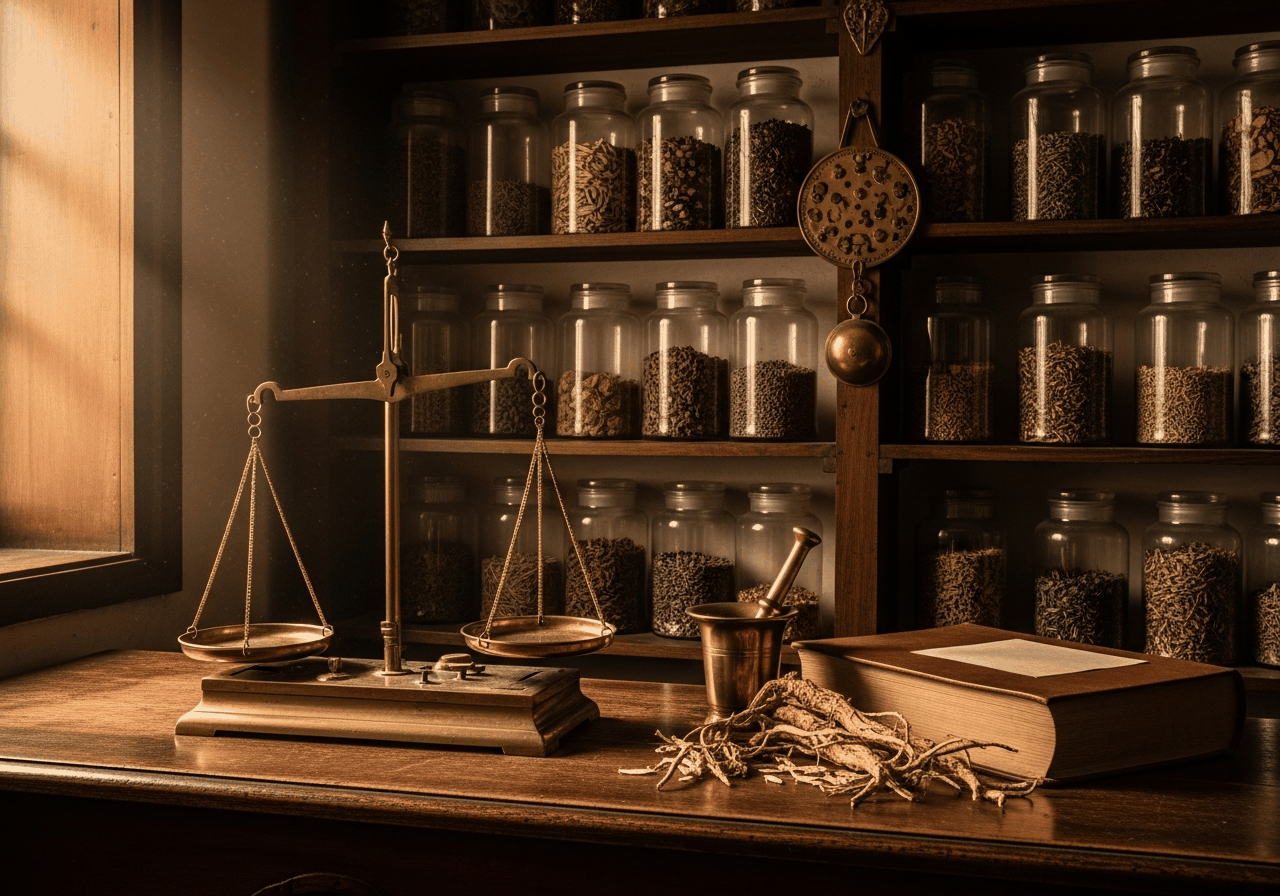
Cleaning & grading
Every lot is washed, de-stoned and spread on stainless trays where stalk, leaf and damaged fruit are picked out by hand. Seed is winnowed and sieved to a uniform size so it releases evenly in the still. It is the slowest, least glamorous stage in the building and the one that decides everything downstream — an off-grade lot is rejected here, not blended away later.
- Wash Three-stage potable water rinse
- Grading Hand sort + mesh sieve, lot by lot
- Rejection Whole lot, never partial salvage
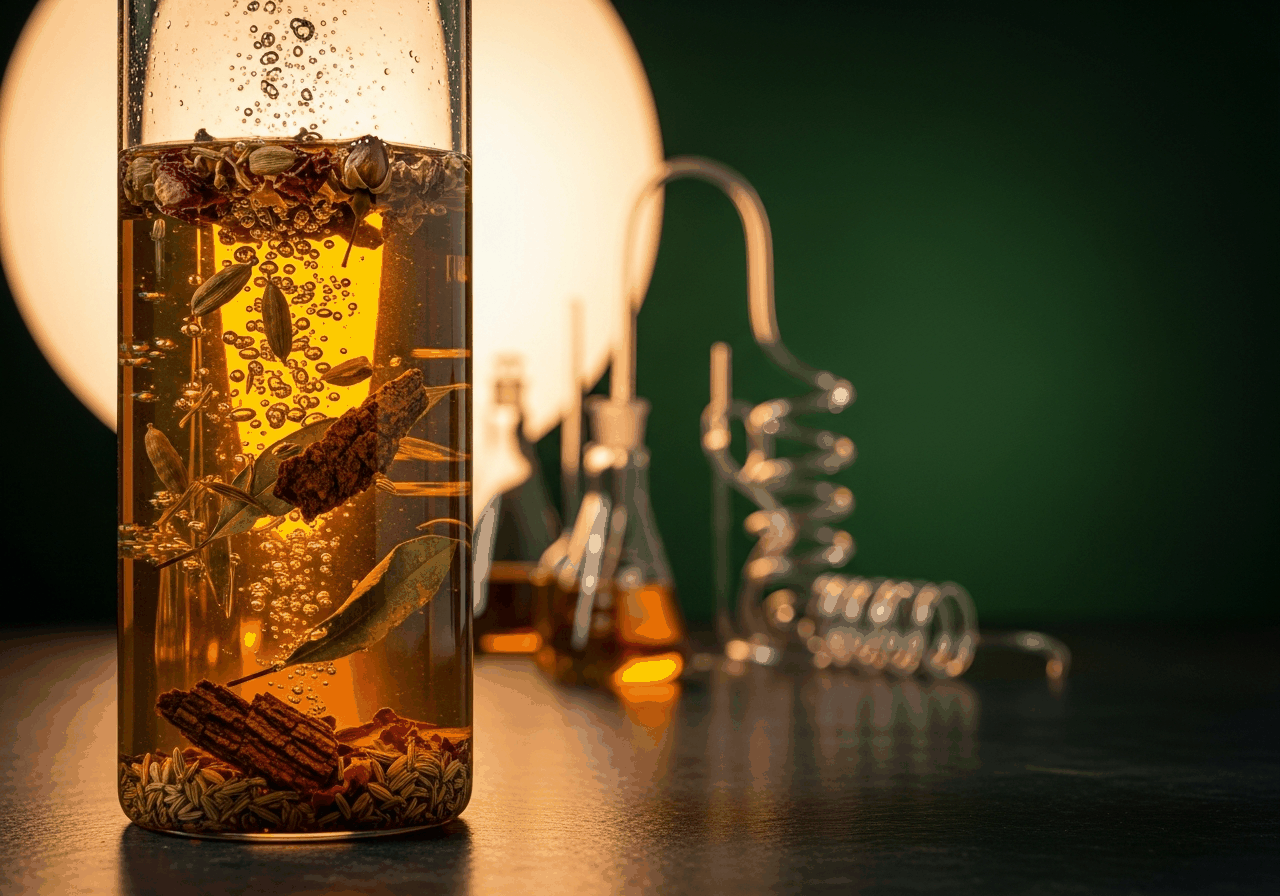
Extraction & distillation
Arqiyat are distilled slowly in copper — a low, watched temperature that carries the volatile aroma across without cooking it. Sharbat and rub take the other road: fruit is pressed, strained through muslin and reduced in open jacketed pans until the syrup coats the back of a spoon. No essences, no synthetic colour, no added preservative. If a syrup is deep red it is because the fruit was.
- Arqiyat Copper still, slow low-temperature run
- Sharbat & rub Open jacketed pan, muslin strained
- Added to the pan Fruit, herb and sugar. Nothing else.

Quality-control laboratory
Nothing moves to filling until our own laboratory releases it. Each batch is checked for appearance, aroma and taste, then for pH, specific gravity, microbial limits and heavy metals. A retained sample is set aside and kept past the printed expiry date, so a bottle bought two years from now can still be matched against the lot it came from.
- Tests per batch Seven, before any release
- Retained sample Held beyond the printed expiry
- Release Signed by the QC in-charge, on file
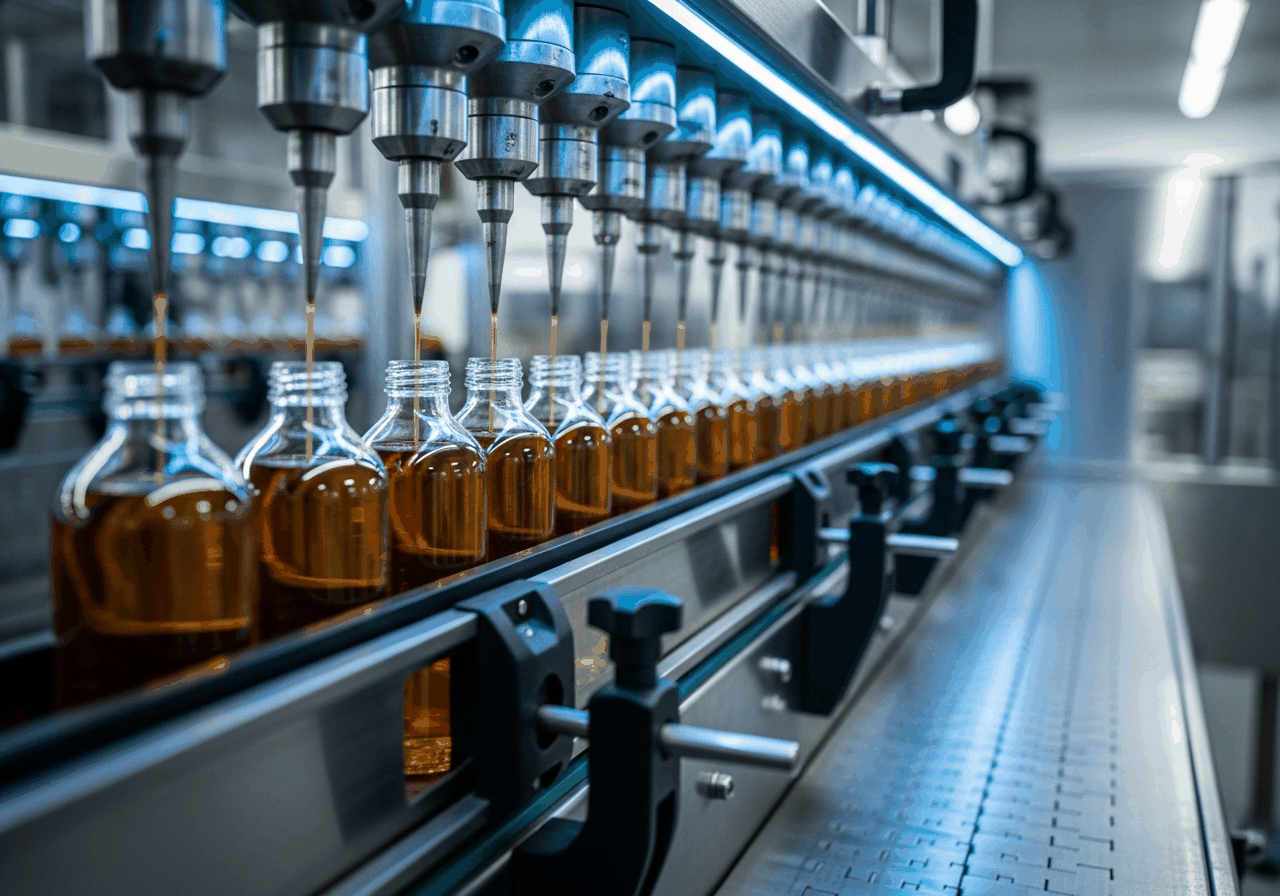
Filling & sealing
Bottles are rinsed and inverted to drain immediately before filling, so nothing sits open on the line. Fill volume is checked by weight at set intervals across the run, caps are torque-tested, and every bottle gets an induction seal under the cap — the foil disc you break on opening. Batch number, manufacturing date and expiry are printed on the carton and the label at the same station.
- Primary pack Food-grade glass and PET
- Seal Induction foil + tamper-evident cap
- Fill check By weight, at fixed intervals per run

Warehousing & dispatch
Released stock is palletised in a cool, dark store and rotated strictly oldest-first, so what reaches you is never the bottle that has been sitting longest. Online orders are picked, double-boxed with the bottle necks wrapped, and handed to the courier within one working day. A tracking number reaches you by SMS the moment the parcel leaves the gate.
- Storage Cool, dark, off-floor, FEFO rotation
- Order cut-off Dispatched within one working day
- Transit 2–3 days major cities, 4–5 elsewhere
Every bottle leads back to a sack of herbs
The batch number printed on your carton is not decoration. It opens a file in our laboratory that names the supplier and intake date of every raw material in that run, the extraction log, the seven release tests and the signature of the person who cleared it. That file — and a sealed retained sample of the batch — stays with us long after the expiry date has passed.
If a bottle ever looks, smells or pours wrong, photograph the carton so the batch line is readable and send it to us. We can tell you within a day exactly which lot you are holding and what it was tested against.
- Batch
- LHP‑2604‑A17
- Made
- April 2026 · Line A
- Expiry
- 24 months from manufacture
- Licence
- DRAP E. No: 00803
Seven release tests per batch Induction-sealed, tamper evident Retained samples kept past expiry One plant, no contract filling