
Nine Sharbats for a Pakistani Summer: A Guide to the Cooling Trolley
From falsa and anar to sandal, bazuri motadil and shikanjbeen — what each traditional sharbat tastes like, the cooling role it has always played in a Pakistani summer, how far to dilute it, and where it belongs on the iftar table.
The trolley comes out in the last week of April, about the time the ceiling fan stops being enough on its own. Bottles at the back, a jug of cold water, a bowl of ice, glasses turned upside down on a steel tray — so that when a cousin arrives off a motorcycle at four in the afternoon with the sun still at forty-four degrees, something is in his hand within a minute of his sitting down. Which bottle gets chosen is rarely random, and the reasoning behind it is a good deal older than the trolley.
Why a sharbat rather than plain cold water
There is a practical answer and a traditional one. Practically, a long Pakistani afternoon takes more out of a person than water alone puts back. A sharbat carries sugar for a flagging body and, in the fruit varieties, the acids and character of the fruit it was pressed from. A glass of falsa at five o’clock simply lands differently from a glass of water at five o’clock, and anyone who has drunk both knows it.
The traditional answer is more interesting. Unani medicine treats iced water taken in quantity as a shock to the digestive fire rather than a mercy: it cools the surface while stalling the work going on underneath. A sharbat mixed with cool water and a few cubes — rather than water straight from the deep freeze — is understood to bring down the body’s hararat without putting the stomach out of action. It is exactly the reasoning behind a grandmother taking the freezer bottle out of the hands of a boy who has just come in from cricket.
Cool the body; never chill the stomach — the rule every dispensary in Multan repeats from May through September, and the whole reason the sharbat exists at all.
The fruit sharbats
The workhorses of the trolley: concentrated fruit, sugar, and in the good ones very little else.
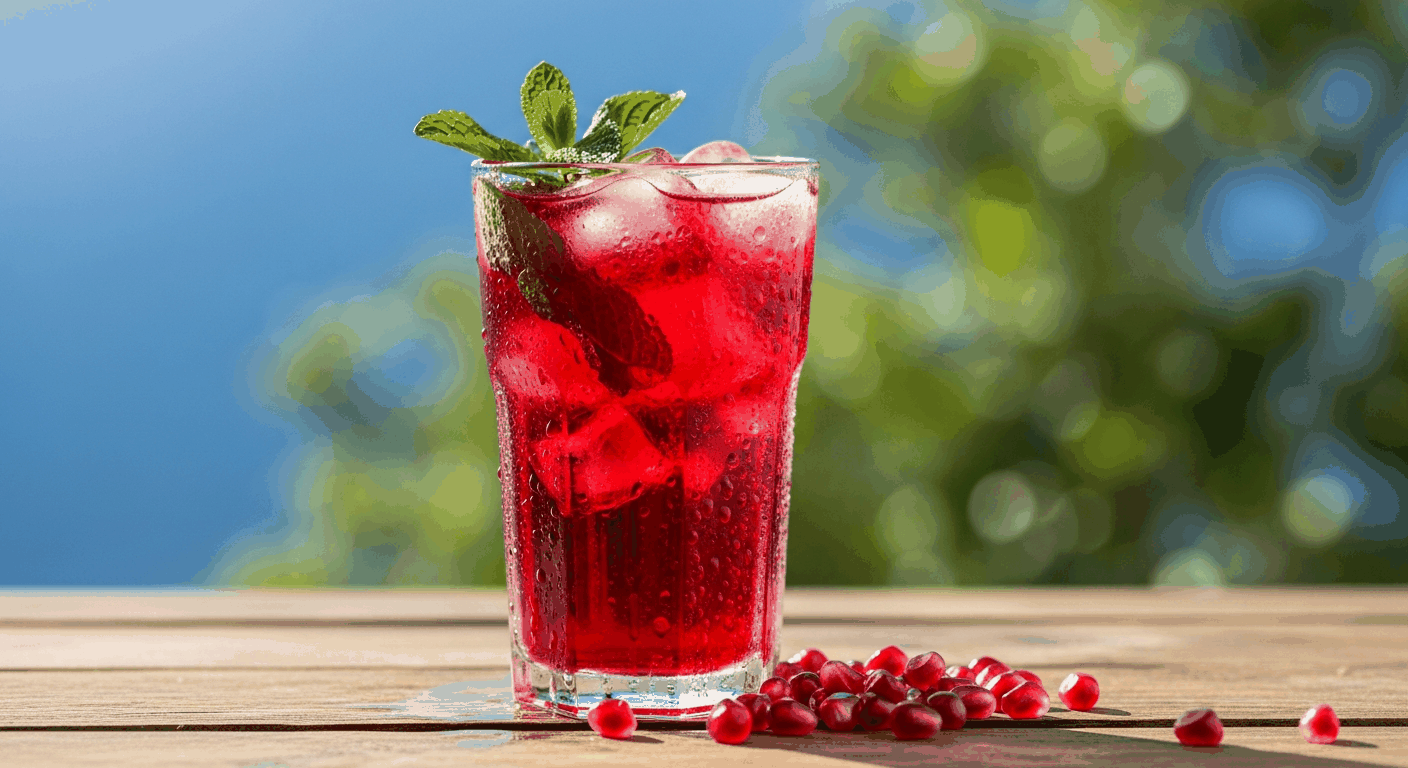
Anar (pomegranate)
Deep red, tart before it turns sweet, with a dry finish that keeps it from cloying. Anar is the sharbat traditionally offered to someone who has stopped eating properly in the heat — in Unani practice pomegranate is associated with appetite and with a sense of being restored rather than merely cooled. It is also the least sugary-tasting of the fruit syrups, and so the safest choice for a guest whose tastes you do not know.
Falsa
Falsa has the shortest season of anything on the trolley: a few weeks of small purple berries heaped on barrows, then gone until next year — which is precisely why the syrup matters. The colour sits somewhere between plum and ink; the taste is sharp-sweet with an astringent edge. Traditionally it is the summer-heat drink above all others, given after a long afternoon outdoors and to anyone who has come home flattened by the loo, the dry hot wind of the plains.
Alu bukhara (plum)
Made from the dried sour plum, this one is sweet and sour in near-equal measure with a stewed-fruit depth behind it. It is the household choice for children and for the short temper that comes with heat; traditionally alu bukhara is regarded as gentle on the bowels and mildly cooling, which is why it turns up so often in Ramadan when everyone’s routine is upside down.
Toot siah (black mulberry)
Ink-dark and unmistakable — it will stain a white kurta at ten paces. The flavour is deep and jammy with only a light tartness. Toot siah is the traditional choice for the throat and mouth: teachers, imams, singers and anyone who has spent a day talking over a fan reach for it, usually sipped slowly and only lightly diluted.
The aromatic and compounded sharbats
Sandal (sandalwood)
Pale, perfumed and unmistakably cooling — there is a reason sandal is what appears in white glasses at summer weddings. In classical practice sandalwood is among the strongly cooling materials, used for the head that aches after too long outdoors and for restlessness on nights when the room simply will not cool. The perfume is powerful, so it wants more dilution than the fruit syrups.
Bazuri motadil
The name tells you what it is: bazuri from the seeds — melon, cucumber and their relatives — and motadil meaning temperate, balanced. It is a compounded sharbat rather than a fruit one: faintly seedy, gently sweet, mild on the palate. Traditionally it is taken through the hot months for urinary comfort, the scantiness and burning that follow a day of sweating and not drinking enough. It tends to be the bottle the elders of the house keep for themselves rather than for guests.
Rooh-e-kosar
The festive bottle. A perfumed blend built around kewra and rose, it is the smell of Eid morning and of a wedding at which somebody’s uncle has taken personal charge of the milk drinks. It is at its best stirred into cold milk with a few crushed almonds rather than into water, and a very little goes a very long way.
Elaichi (cardamom)
Green, warm-aromatic and faintly resinous, cardamom sharbat sits between refreshment and digestion. It works in milk and in water equally well, and it is the one people reach for after an evening meal rather than in the middle of the afternoon — elaichi’s traditional role has always been as much about settling the stomach as about flavour.
Shikanjbeen
The outlier, and the oldest idea on the trolley. Shikanjbeen is a sweet-and-sour preparation — sugar or honey with vinegar and lemon, often with mint — belonging to the family of medicines that Greek and Arab physicians called oxymels. It is bracing rather than soothing, and it is the answer for whoever in the family finds every other sharbat too sweet. Traditionally it is associated with thirst, appetite and the heaviness of rich summer eating.
The trolley at a glance
| Sharbat | Flavour | Traditionally used for | Best served with |
|---|---|---|---|
| Anar | Tart-sweet, dry finish | Appetite; restoring after a hot day | Cold water, a pinch of black salt |
| Falsa | Sharp-sweet, astringent | Summer heat and exposure to the loo | Cold water, crushed ice, a mint sprig |
| Alu bukhara | Sweet-sour, stewed-fruit depth | Cooling; gentleness on the bowels | Cold water; a favourite with children |
| Toot siah | Deep, jammy, lightly tart | Throat and mouth comfort | A little cool water, sipped slowly |
| Sandal | Perfumed, faintly woody | Heat in the head; restlessness | Chilled water or milk, well diluted |
| Bazuri motadil | Mild, gently seedy | Urinary comfort in hot weather | Plain cool water, taken through the day |
| Rooh-e-kosar | Rose and kewra, floral | Festive refreshment; cooling | Cold milk, crushed almonds, ice |
| Elaichi | Warm, aromatic, resinous | Refreshment and settling after food | Milk or water; good after dinner |
| Shikanjbeen | Sweet-sour, bracing | Thirst and appetite in heavy heat | Cold water, fresh lemon, bruised mint |
Dilution, ice and the iftar table
More sharbat is spoiled by a heavy hand than by anything else. Concentrate poured to a third of the glass is not generosity; it is a headache by seven o’clock. As a starting point:
- Fruit sharbats (anar, falsa, alu bukhara, toot siah) — one part sharbat to six or seven parts cold water.
- Sandal and rooh-e-kosar — one part to eight or ten in water; two teaspoons per glass when using milk.
- Bazuri motadil — one to eight, spread across the day rather than drunk all at once.
- Elaichi — one to six in water, or two teaspoons stirred into a glass of cold milk.
- Shikanjbeen — one to seven, with an extra squeeze of fresh lemon and a bruised mint sprig.
Three or four cubes in the glass, not a jugful. Stir the cloudy ones rather than shaking them. And mix only what will be drunk within the hour: the sugar that keeps a sealed bottle safe does nothing for a diluted jug standing in a hot kitchen since noon.
At iftar
Order matters more at iftar than at any other time of year. After fifteen hours the stomach is empty and the temptation is a freezing glass of something sweet, which is the reliable route to feeling heavy-chested at Taraweeh. Begin with dates and plain water, then a mild sharbat at room temperature or barely cool — alu bukhara, anar or elaichi — before the fried things arrive. Keep falsa and shikanjbeen for later in the evening, when they cut through a heavy plate rather than land on an empty one. Rooh-e-kosar in cold milk belongs at sehri, where it does more good than tea.
Stocking the trolley: what to actually do
Three bottles will carry a household through a whole summer. Choose one everyday fruit sharbat you would happily drink daily — anar or falsa. Add one cooling aromatic: sandal if the heat goes to your head, bazuri motadil if the household elders are the ones suffering. Then one festive bottle, rooh-e-kosar, for the days when guests arrive without warning. Anything beyond that is enthusiasm, and you can browse the rest of our sharbats and fruit syrups at leisure.
Store them properly and they will last the season: a cool dark cupboard rather than the shelf above the stove, a clean dry spoon every time, and refrigeration once opened. A little separation in a genuine fruit sharbat is normal — shake it. If the heat brings other complaints with it, the thin, sugar-free arqiyat such as arq-e-gulab sit naturally beside the trolley, and the rest of the range is a short walk away.
None of this is nostalgia. The sharbat trolley is a working system for carrying a family through five very hot months, tested rather more thoroughly than anything that arrives in a can.
Ask us something
Questions about dosage, ingredients or which product suits you are welcome — a member of our team reads every message. We cannot diagnose or treat conditions here; for that, please speak to your physician or hakeem.