
Mausam Badal Raha Hai: Building Resilience the Unani Way
The first cool mornings in Multan are when households start clearing their throats. Here is how Unani thinking approaches the turn of season — mizaj explained plainly, the herbs worth keeping in the kitchen, and a routine you can actually follow from October.
The first properly cool morning in Multan arrives without much warning. One night the fan is still turning, and by the next fajr there is a draught coming off the courtyard that has you reaching for a chaddar — and within a week half the household is clearing its throat over breakfast. Unani physicians have always watched this particular fortnight closely, not because the weather is dangerous, but because the body turns more slowly than the sky does.
Mizaj, explained without the mysticism
Mizaj is usually translated as “temperament”, which makes it sound far more mystical than it is. In practice it is a descriptive vocabulary — a way of noting whether a person, a food or a season tends to run warm or cool, damp or dry. Most Pakistani families already speak it fluently without ever using the word. When your khala says she cannot take too much garam cheez, or that desi ghee sits heavy on her in June but suits her perfectly in December, she is using mizaj.
The classical texts describe four broad tendencies — hot, cold, moist and dry — in various combinations, and they apply the same grid to seasons, foods and herbs alike. Autumn turning to winter across the plains of Punjab and Sindh is read as cool and dry: the air loses its moisture, lips crack, skin flakes, throats go scratchy and chests feel tight. The reasoning that follows is not complicated. What the season strips out, the kitchen puts back — softening, moistening things for the dryness, and gently warming things for the chill.
Reading your own tendency
You do not need a formal assessment for this. Notice what you already know about yourself: whether you feel the cold before anyone else in the room does, whether heavy oily food leaves you sluggish, whether you get a dry throat first or a blocked nose first, whether you still feel thirsty in December or barely drink at all. Two people in one house, under the same weather, can need opposite things — and the whole point of mizaj is to stop treating everybody identically. It is a lens for observation, not a diagnosis, and it never replaces a doctor’s assessment when something is genuinely wrong.
Why the turn of season catches us out
There is nothing superstitious about the change-of-season slump. From October the swing between a 32°C afternoon and a 16°C dawn can be twenty degrees inside twelve hours, and most of us dress for one and not the other. Water intake collapses the moment the weather cools — people who managed three litres a day in August are quietly dehydrated by November. Add the dust and crop-stubble haze that settles over the plains at this time of year, schools back in full session, wedding halls filling up, and rooms shut tight against the cold, and you have an entirely unremarkable recipe for scratchy throats travelling through a family.
The traditional response was never one heroic remedy. It was a set of small adjustments made early — before the cough, not after it — which is precisely the part most households skip. We wait until somebody is properly unwell and then reach for the strongest thing in the cupboard, which is the least useful order to do things in.
Parhez ilaj se behtar hai — restraint beforehand beats treatment afterwards. Every grandmother in the country says it, and every household has forgotten it by the third week of October.
The herbs that earn their place
A short list used consistently does far more than a shelf of jars you open twice a year. These are the names that recur in almost every classical cold-weather formulation in the subcontinent, and most of them are already in a Pakistani kitchen or no further away than the nearest pansaar shop.
| Herb | Traditionally used for | Typical form |
|---|---|---|
| Banafsha (sweet violet) | Soothing a dry, tickly throat in cold, dusty weather | Dried flowers, steeped in hot water |
| Unnab (jujube / ber) | Softening a hard cough; a fixture of classical chest decoctions | Dried fruit, gently simmered |
| Sapistan (lasoora) | The traditional companion to unnab in the same decoctions | Dried fruit, gently simmered |
| Mulethi (liquorice root) | Coating an irritated throat; sweetening bitter preparations | Stick chewed, or powder in a decoction |
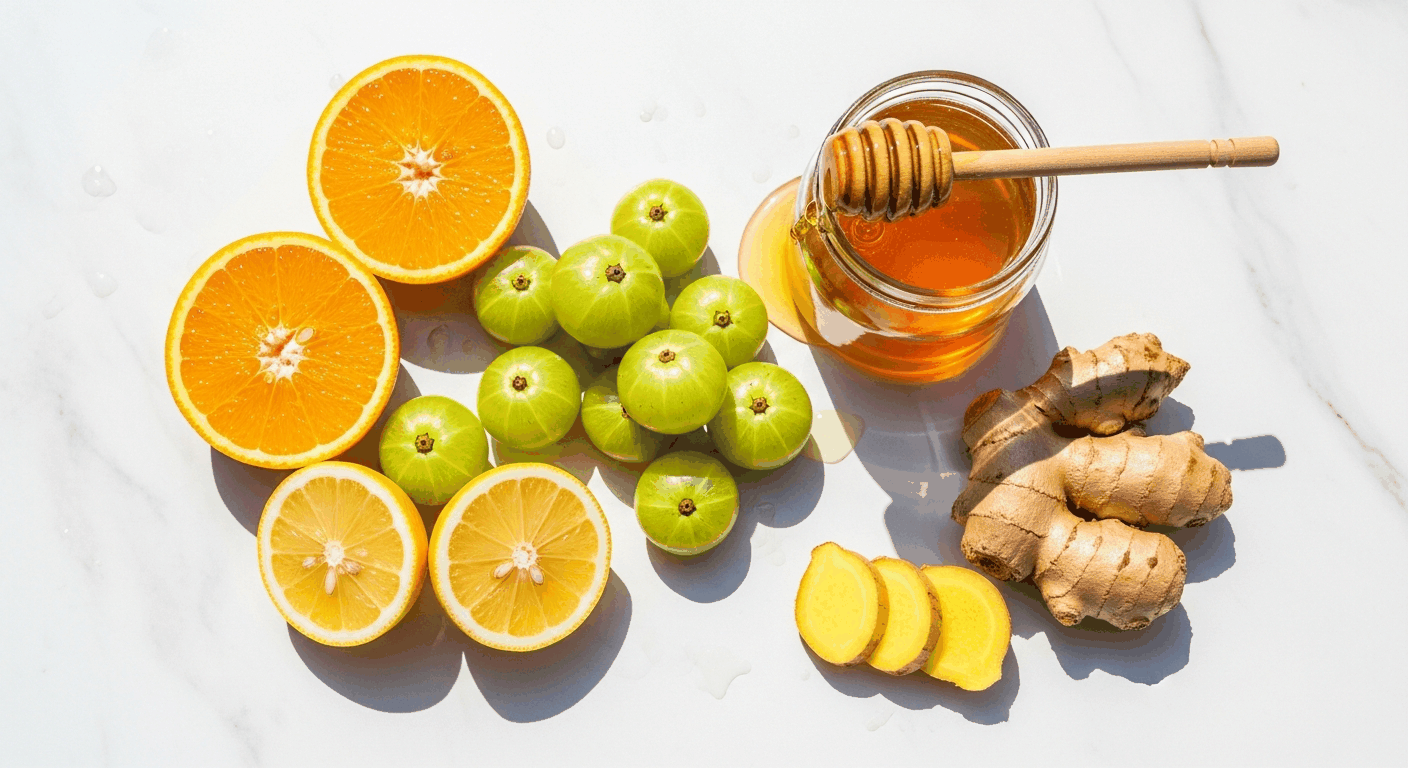
| Adrak (ginger) | Warming a cold stomach, settling nausea, easing a heavy chest | Fresh, grated into tea or hot water |
| Amla (Indian gooseberry) | A sour, cooling fruit taken right through the cold months | Fresh, murabba, or dried powder |
| Shahad (honey) | Carrying other herbs; easing throat discomfort in adults and children over one | Raw, stirred into warm — never boiling — liquid |
Two things need saying plainly about that list. First, these are traditional uses, described as such: a cup of banafsha tea is a comfort measure for a scratchy throat, not a treatment for an infection, and nothing here is a substitute for seeing a doctor. Second, quantity matters more than most people assume. Mulethi in particular is not something to take in large amounts daily for months on end — it is well known to affect blood pressure and potassium levels in heavy users — so anyone with hypertension, heart or kidney problems should ask their doctor before making it a habit.
Where joshanda fits
Joshanda is the household standby of the northern winter for a good reason: it puts most of the above into one warm cup at the end of the day. Made properly it is a gentle decoction of flowers, seeds, bark and root, simmered briefly and then left covered to rest. Made badly — sachet flung into a rolling boil, three spoons of sugar to hide the bitterness, drunk once and abandoned — it is just brown water with a reputation.
If you keep only one seasonal habit from October onwards, a properly made cup in the evening through the cold weeks is the one worth keeping. Powdered blends of the same herbs sit in the safoof range, and the ready-made preparations in our herbal syrups and tonics exist for the nights when nobody in the house has the patience to stand over a pan.
A routine that begins in October
None of this is dramatic, and that is the point. A seasonal routine works because it is boring enough to keep for eight weeks. Layer these in gradually rather than announcing a new regime to the whole family on the first cold day.
Through the day
- Dress for the dawn and the dusk, not the afternoon. A light shawl by the door does more good than any tonic in the cupboard.
- Drink to a target rather than to thirst — thirst is an unreliable guide once the weather cools. Warm water and unsweetened kahwa both count.
- Eat something sour and fresh every day. Amla, malta, kinnow and lemon all arrive together at exactly the right moment, which is not a coincidence anybody needs a study to appreciate.
- Retire the chilled summer sharbat trolley and move to warm drinks; if you want the same flavours, a spoonful of a fruit sharbat stirred into warm water is a reasonable bridge for children.
- Keep a digestive on hand for the wedding season. A small dose of arq-e-badiyan or arq-e-podina after a heavy dinner is a very old habit; the arqiyat range covers the usual suspects.
- Gargle with warm salt water at the first scratch, before it becomes a project.
Evenings
Warm oil into the scalp and the soles of the feet twice a week is the single most reliably kept tradition in Pakistani homes, and the least fussy. Roghan-e-badam or a simple herbal oil, warmed slightly between the palms, ten minutes, done — the herbal oils shelf exists mostly for this. Follow it with an early night. Sleep is the part of immunity nobody can sell you, and it is doing more work than anything else on this list.
What to actually do this week
Start small and start now, while everyone is still well. Buy the four things you will genuinely use — dried banafsha, unnab, a stick of mulethi and fresh ginger — and keep them where you can see them. Put a jug of water somewhere obvious and finish it daily. Move bedtime forward by half an hour. From the first cold snap, make one cup of a proper decoction in the evening and drink it warm, sitting down, indoors.
And keep the honest line in view: this routine is for the ordinary scratchiness of a changing season. A fever that will not settle, a cough that outlasts two weeks, breathlessness, chest pain, or weight loss with night sweats belong to a doctor, and the sooner the better. Traditional care is at its best in the weeks before you need anything at all.

Ask us something
Questions about dosage, ingredients or which product suits you are welcome — a member of our team reads every message. We cannot diagnose or treat conditions here; for that, please speak to your physician or hakeem.